



Yes, an eligible Dubai free zone company can operate in Dubai mainland through an approved arrangement, such as establishing a mainland branch or obtaining a Free Zone Mainland Operating Permit. However, a free zone licence alone does not automatically authorise mainland operations. Eligibility depends on the company’s activities, licensing requirements and applicable approvals.
A free zone company in mainland Dubai can explore business opportunities without necessarily relocating its existing operations, provided it meets the applicable licensing requirements. However, a free zone licence does not automatically authorise every type of mainland activity. The appropriate arrangement depends on the services the company provides, the duration of its mainland operations and whether it needs a permanent local presence.
Businesses can generally consider two routes:
- Establishing a mainland branch or
- Obtaining a Free Zone Mainland Operating Permit for eligible activities. Understanding the difference helps companies choose a structure that fits their commercial plans without taking on unnecessary registration costs.
What Are the Ways a Free Zone Company Can Operate in Mainland Dubai?
Establishing a branch of a free zone company in mainland Dubai may suit a business that intends to serve mainland customers on an ongoing basis. The branch provides a formal route for conducting authorised activities in Dubai while the parent company retains its free zone registration.
For businesses exploring how a free zone company can do business in Dubai mainland, the Free Zone Mainland Operating Permit offers a different approach. Rather than establishing a separate mainland branch, an eligible company can use the permit to carry out specified activities for a limited period. Under the arrangements described for this framework, the permit is valid for up to six months and may be renewed for a further six months. The stated Free Zone Mainland Operating Permit cost is AED 5,000 per six-month period.
For businesses testing a new market or completing a defined project, this temporary option may be more practical than setting up a permanent mainland establishment. Companies should nevertheless confirm which activities the permit covers before entering into contracts or beginning work.
Businesses holding a Dubai Unified Licence (DUL) can access the relevant application process through Dubai’s digital business platforms, subject to the applicable eligibility criteria and approvals.
Who Is Eligible, and Which Activities Are Excluded?
Access to the permit depends on the company’s registration, licensed activities and the regulatory requirements governing its industry. The framework is intended for qualifying businesses registered in Dubai’s free zones, but not every activity automatically falls within its scope.
Technology services, consulting, professional services, design and certain trading activities may be eligible, depending on the applicable rules. Businesses operating in regulated sectors should pay particular attention to additional approval requirements. A general operating permit may not replace a licence or authorisation required from a sector-specific regulator.
Financial institutions licensed by the Dubai International Financial Centre (DIFC) are excluded from this arrangement.
Before applying, companies should compare their existing free zone licence with the activities they intend to perform on the mainland. This helps to identify licensing gaps early and reduce the risk of delays or unauthorised operations.
Which Route Fits Your Situation?
The selection of suitable structure depends primarily on the company’s planned activities, duration of operations on the mainland and need for a permanent physical presence.
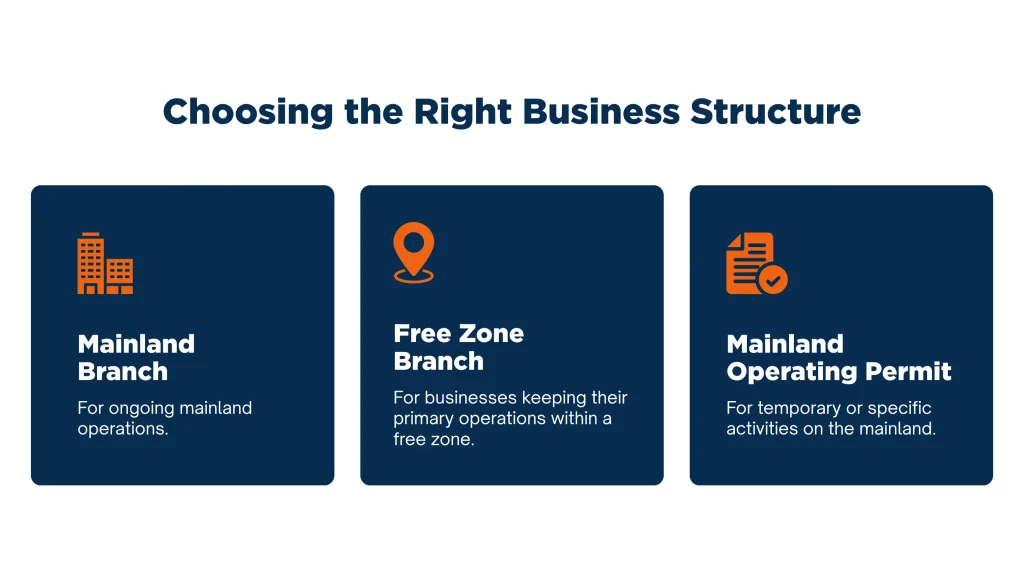
• For ongoing operations on the country’s mainland: registering a mainland branch may be a suitable option.
• To maintain the primary place of business within a free economic zone: one might consider a branch operating out of the free zone.
• For temporary or specific activities on the mainland: obtaining a Free Zone Mainland Operating Permit may be a more appropriate solution for free zone companies.
These options are not interchangeable in every situation.
A company planning to recruit staff, maintain a mainland office or undertake activities subject to additional regulation may have different obligations from a business carrying out a short-term project.
Reviewing the expected workload, staffing arrangements and licensing requirements before choosing a route can help the company avoid unnecessary costs and administrative complications.
What Happens to Your Tax Position When You Trade on the Mainland?
Expanding into the mainland can also affect a free zone company’s UAE corporate tax position. Qualifying Free Zone Persons may benefit from a 0% corporate tax rate on Qualifying Income, but that treatment does not automatically extend to all income earned by the business.
Income attributable to a mainland permanent establishment is generally subject to the ordinary UAE corporate tax rules. The tax treatment depends on the company’s circumstances, including the nature of its mainland activities and whether those activities create a permanent establishment for corporate tax purposes.
Companies operating across both free zone and mainland markets should maintain financial records that distinguish the income and expenses associated with each part of the business. This helps support the correct allocation of taxable income and the preparation of corporate tax returns.
Tax implications should be assessed before the company expands, rather than after mainland operations have begun. A review of the proposed structure can help identify potential tax liabilities and clarify the records the business needs to maintain.
Want to operate your free zone company in Dubai mainland? CorpLex’s experienced consultants and legal advisors can help you assess your eligibility, obtain a Free Zone Mainland Operating Permit, and navigate licensing, regulatory and tax requirements.
Contact CorpLex today to find the right route for expanding your business into Dubai mainland.
Frequently Asked Questions
-
Can a Free Zone Company Sell Directly to Mainland Customers?
Yes, provided the company is authorised to conduct the relevant activities and meets the applicable mainland licensing or permit requirements. The correct arrangement depends on the nature of the transaction and the goods or services involved.
-
Can a free zone company bid in Dubai government tenders?
A free zone company may be eligible to participate in government tenders if it meets the requirements set by the relevant government entity. These may include specific licensing, registration, local presence or other conditions stated in the tender documents.
-
Can I retain my free zone licence and conduct business on the mainland?
Yes. Eligible companies may retain their existing free zone licence while undertaking authorised mainland activities. They must still comply with the conditions of the applicable permit or branch licence.
-
What is the cost of a mainland operating permit, and how long is it valid?
The stated fee is AED 5,000 for a six-month period. The permit may be renewed for another six months, subject to the applicable requirements. Companies should confirm the current fees and renewal conditions before applying.
-
Does mainland business affect my free zone corporate tax status?
It can. Income attributable to a mainland permanent establishment is generally subject to the ordinary UAE corporate tax rules rather than the 0% rate available to a Qualifying Free Zone Person on Qualifying Income. The actual tax treatment depends on the company’s activities and circumstances.
-
Which activities are not covered by the permit?
Activities outside the authorised scope may not qualify. Certain regulated activities may also require separate approvals or licences. Companies should confirm that their intended work is covered before accepting assignments or starting operations.
-
Can a Free Zone Company Use Its Existing Staff on the Mainland?
Existing employees may perform authorized work activities in the country’s mainland territory, provided that applicable labor and immigration laws, as well as other regulatory requirements, are observed.
-
Do I need to obtain a permit if my company is registered in a free zone outside Dubai?
The operating regime for Dubai’s “mainland” applies specifically to qualifying companies from Dubai’s free zones. Companies registered in free zones in other emirates must comply with the licensing requirements applicable to their planned activities on the mainland.